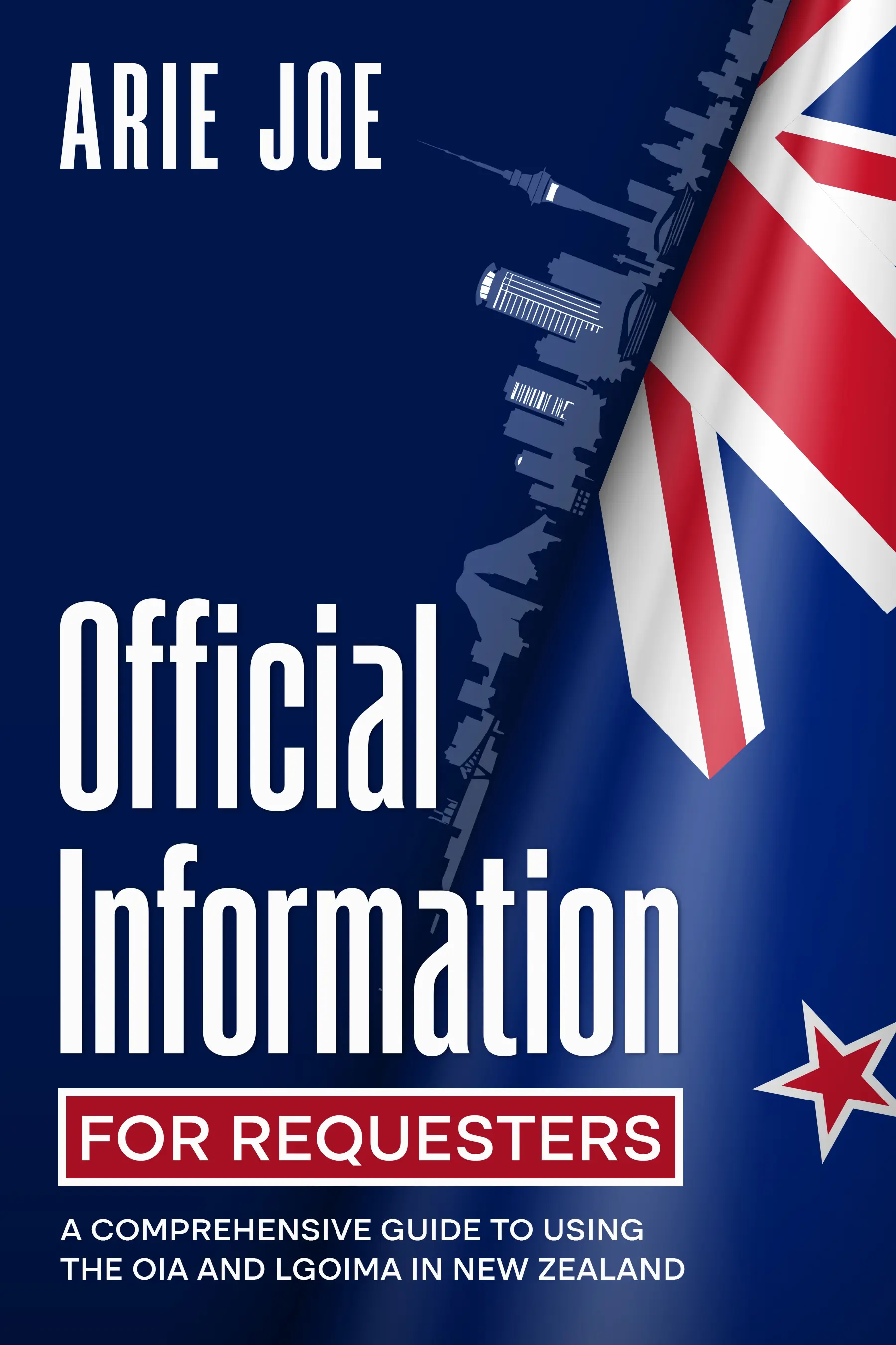
Official Information
For Requesters.
WHY THIS
BOOK MATTERS NOW.
The Official Information Act 1982 gives you a powerful right: the right to access the information held by Ministers and government agencies, with a presumption that it will be released unless there is good reason to withhold it. But a right is only as useful as your ability to exercise it.
Official Information for Requesters is the first comprehensive guide to using the OIA and LGOIMA written entirely from the requester's perspective. It covers everything you need to know, from the history and purpose of the legislation through to crafting effective requests, understanding the withholding grounds, challenging refusals, and complaining to the Ombudsman.
WHAT THIS
BOOK COVERS
Constitutional Framework
How the OIA works and why it matters. The principle of availability, the purposes of the legislation, and how it fits within New Zealand's constitutional framework.
Eligibility & Scope
Who can request and who must respond. Eligibility rules, the agencies covered by the OIA and LGOIMA, and the critical distinction between requests to Ministers and requests to departments.
Defining Information
What counts as official information. The breadth of the definition, the meaning of "held," information on personal devices and held by contractors, and the boundary between the OIA and the Privacy Act.
Strategic Requesting
How to prepare, write, and send effective requests. Research strategies, the duty of due particularity, template requests for common scenarios, and practical guidance on using fyi.org.nz and other channels.
The Agency Side
What happens inside the agency. How agencies receive, scope, search for, consult on, and decide your request, and why understanding this process helps you get better results.
Mechanics & Fees
Time limits, extensions, transfers, and charges. The 20 working day rule, when the clock resets, what agencies can and cannot charge for, and how to challenge unreasonable charges.
Withholding Grounds
The withholding grounds explained. A plain-language, requester-focused guide to every ground on which your request can be refused, including the conclusive reasons in section 6, the good reasons subject to the public interest test in section 9, and the administrative grounds in section 18. Practical advice on spotting refusals that do not stack up.
Troubleshooting
What to do when things go wrong. Step-by-step guidance on handling delays, excessive redactions, "not held" responses, informal discouragement, and the risk of being labelled vexatious.
The Ombudsman
Complaining to the Ombudsman. How the complaint process works in practice, what to include, what to expect, and tips for effective complaints.
Judicial Action
The limited but important role of the courts.
WHO THIS
BOOK IS FOR
The definitive guide for journalists, researchers, lawyers, and citizens.
If you've ever been told "no" by a government agency and wondered whether that was the right answer, this book will give you the tools to fight back and uncover the truth.
NGO Leaders
Arm your organization with the data needed to force policy changes and advocate for the vulnerable.
Journalists
Go beyond press releases. Dig into the internal correspondence that tells the real story of power.
Citizens
Demand to know why local decisions are made. Hold your council and community boards to account.
Lawyers
Master the statutory framework of the OIA/LGOIMA to provide unparalleled tactical advice for clients.
TABLE OF
CONTENTS
The Right to Know
History and Purpose of the OIA
Who Can Request
Who Can Request and Who Must Respond
Official Info
What Is “Official Information”?
Before You Request
Research and Strategy
Effective Request
Crafting an Effective Request
Sending Requests
Where and How to Send Your Request
Agency Process
The Agency’s Process
Time Limits
Time Limits, Extensions, and Transfers
Framework
The Framework for Withholding
Section 6
Conclusive Reasons for Withholding
Section 9
Good Reasons for Withholding
Section 18
Administrative Reasons for Refusal
Ombudsman
Complaining to the Ombudsman
Court Action
Going to Court
Common Problems
How to Handle Issues
Ministers
Requesting from Ministers
LGOIMA
Requesting from Local Government
Special Requests
Special Types of Requests
Investigations
Using the OIA for Research
Proactive Release
Open Government Strategies
Ready to start your first request?
Secure the definitive guide to New Zealand's transparency laws today.
- Title
- Official Information for Requesters
- Author
- Arie Joe
- ISBN
- 978-0-473-78255-9
- Format & Date
- Paperback • 14 Apr 2026